
PUBLISHED: August 2026 by Brady Meadows Williamson
Photos taken by Brady Meadows Williamson
One thing Texas is known for is our show-stopping wildflowers. Painting our highways and supporting biodiversity, these iconic blooms not only inspire our famous state pride but also have deep ties to the landscape and life of our local ecosystem.
With each flower playing an important role, it’s hard to pick favorites. Of all the species that grace our great state, here are some that stand out as Houston all-stars growing wild or incorporated into a home garden.
Big Blooms
As the saying goes: “Everything is bigger in Texas.” These species take that to heart.
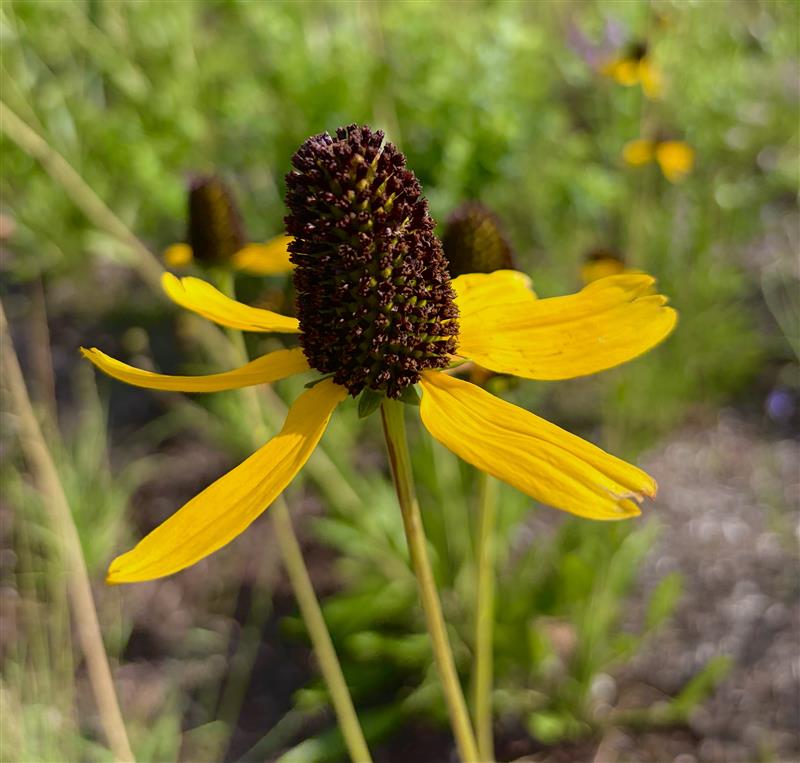
Texas Coneflower
More closely related to Black-eyed Susans (Rudbeckia hirta) than Coneflower (Echinacea spp.), Texas Coneflower (Rudbeckia texana) is hard to miss. Standing up to 5 feet tall, these flowers show off a hefty yellow and brown bloom in the classic cone shape. Not only does this species draw in butterflies, but small birds also enjoy eating the numerous seeds they produce. Although they are found across southeast Texas and southern Louisiana, Texas Coneflower’s range is most tightly concentrated in the Houston area.
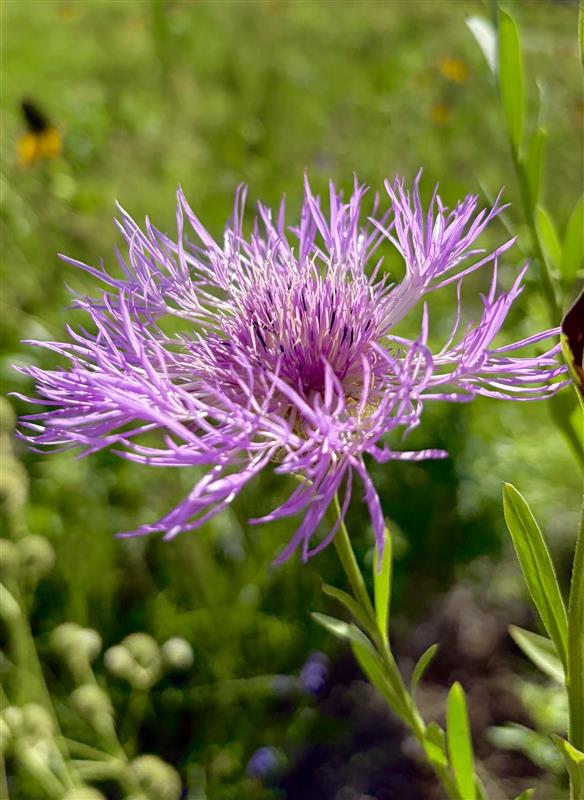
American Basketflower
Not to be confused with the closely named Blanketflower (Gaillardia spp.), the American Basketflower (Plectocephalus americana) boasts a large firework inflorescence (bloom) and stands up to 6 feet tall, even higher than Texas Coneflower. Even as an annual, this species still packs a punch for pollinators with their 4–5-inch filamentous flower heads that can support a range of pollination methods.
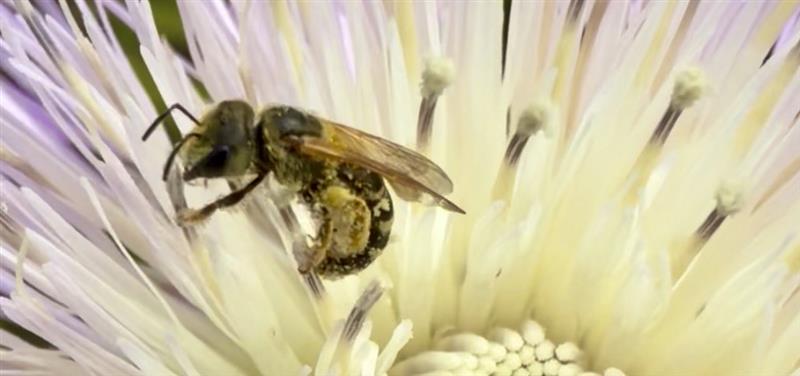
A tiny Furrow Bee (Halictus sp.) pollinating a Basketflower (Plectocephalus americana).
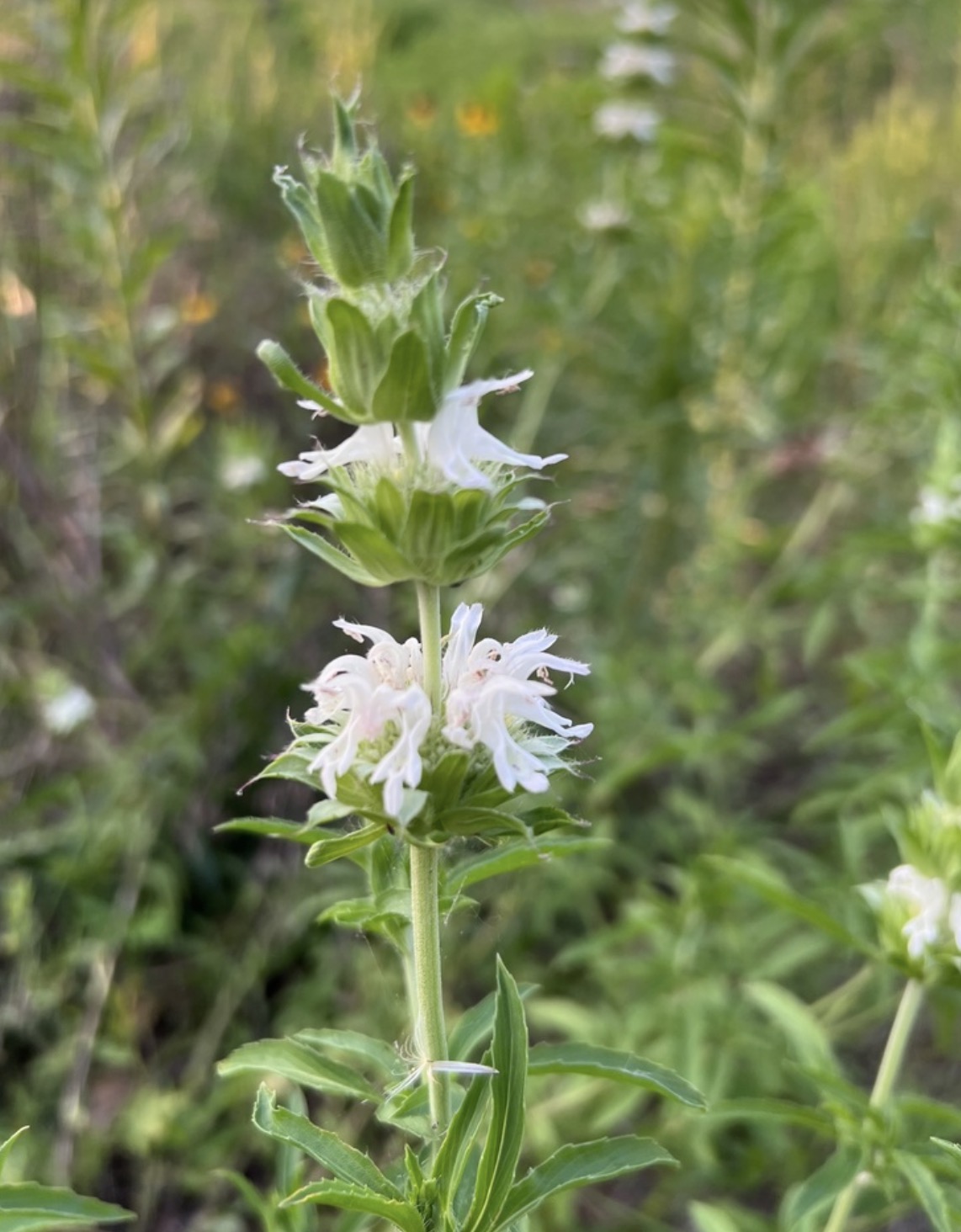
Lemon Beebalm
Another large bloom you’re likely to encounter on your next walk or scenic drive is Lemon Beebalm (Monarda citriodora), also commonly known as Purple Horsemint. A member of the Mint Family (Lamiaceae), this aromatic plant displays stacked discs of smaller lavender, pink, or white-colored flowers that support many nectar-loving pollinators, especially Bumble Bees (Bombus spp.) and Carpenter Bees (Xylocopa spp.).
A white Lemon Beebalm (Monarda citriodora) at the W. 11th Street prairie.
Weird and Wild
Located at the intersection of 10 ecoregions, Houston’s unique combination of ecosystems has led to a collection of even more unique appearances in the native plants.
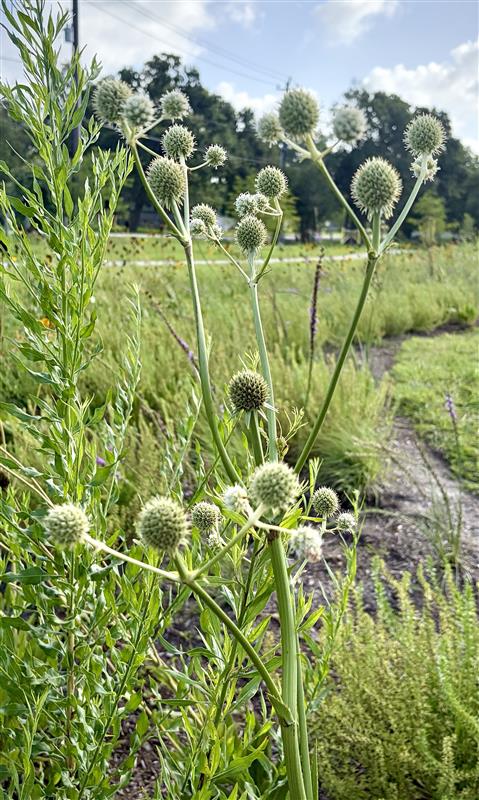
Rattlesnake Master
A whimsical sight in prairies or open wooded areas, Rattlesnake Master (Eryngium yuccifolium) is probably one of the coolest-named and strangest-looking wildflowers of Texas. Their “flowers” are the white, spiked globes that branch off from a tall main stem and seem to be irresistible to all kinds of insects, from your typical bees and butterflies to more uncommon beetles and plushback flies. This plant also draws in many predatory insect species such as dragonflies, robber flies, and assassin bugs which act as biological controls by preying on pest species.
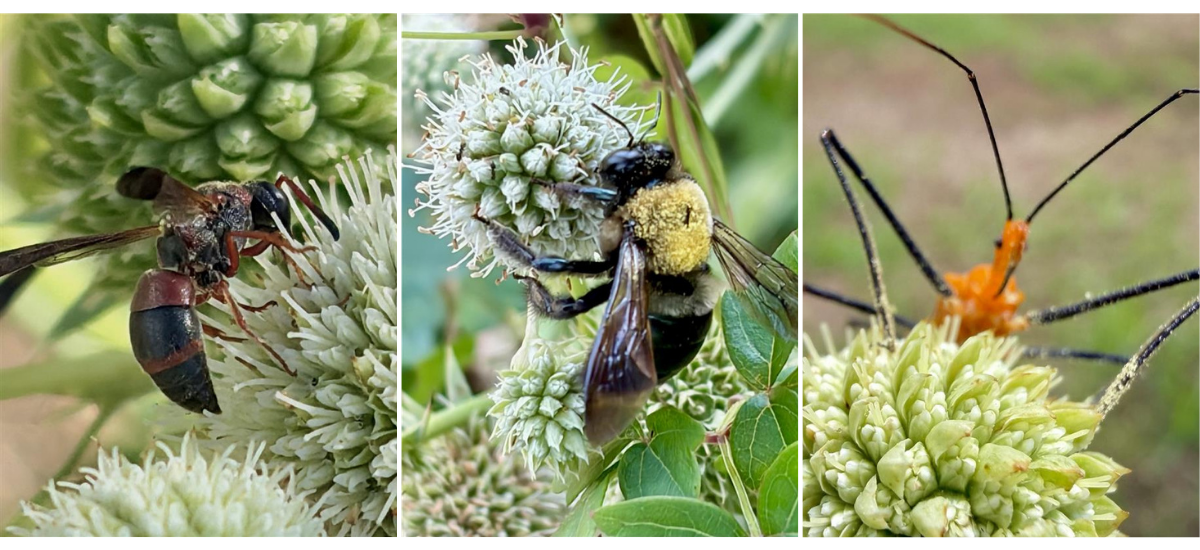
A Pachodynerus Wasp (Pachodynerus erynnis), Eastern Carpenter Bee (Xylocopa virginica), and Milkweed Assassin Bug (Zelus longipes) enjoying Rattlesnake Master’s many blooms.
Lanceleaf Blanketflower
One of the more iconic flowers across the Texas roadsides is Firewheel (Gaillardia pulchella), but have you heard of this perennial’s sibling species, Lanceleaf Blanketflower (Gaillardia aestivalis)? Where Firewheel grows across North America, Lanceleaf Blanketflower is much more local, found across most of Texas and can be identified by its deeply cut (and super cute) petals resembling a child’s drawing. Both species have special value to native bees in the Houston region.
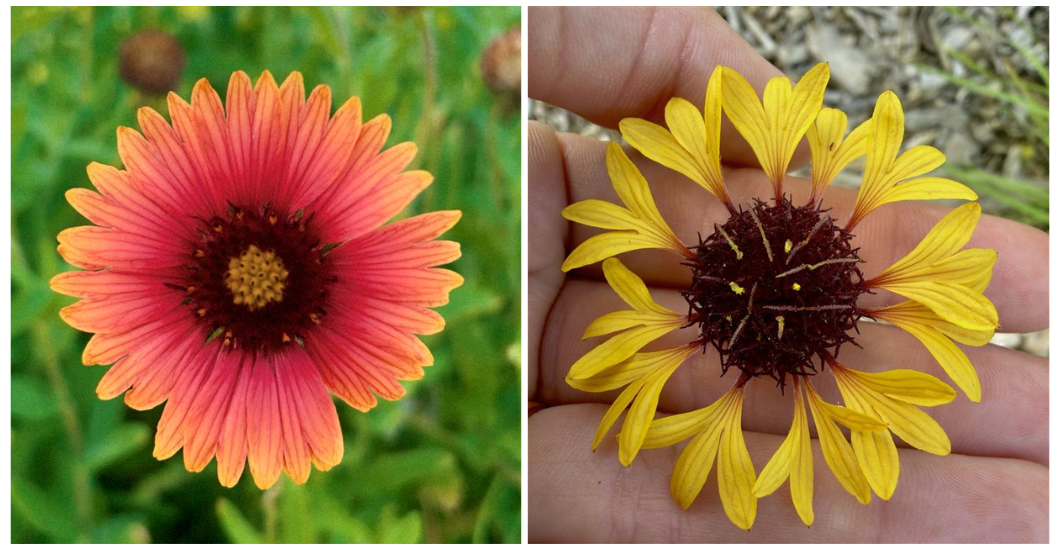
Firewheel (Gaillardia pulchella) vs. Lanceleaf Blanketflower (Gaillardia aestivalis)
Sharp Blazing Star
Sharp Blazing Star (Liatris acidota) may not be a household name like Bluebonnets (Lupinus spp.) and Paintbrushes (Castilleja spp.), but unlike those species which grow across North America, Sharp Blazing Star is found only in Texas and Louisiana along the Gulf Coastal Plains. This super-local species loves Houston’s moist soils and sunny prairies but is less commonly found. However, if you are lucky to come across Sharp Blazing Star in bloom, it’s very easy to spot its bright purple plume of flowers.
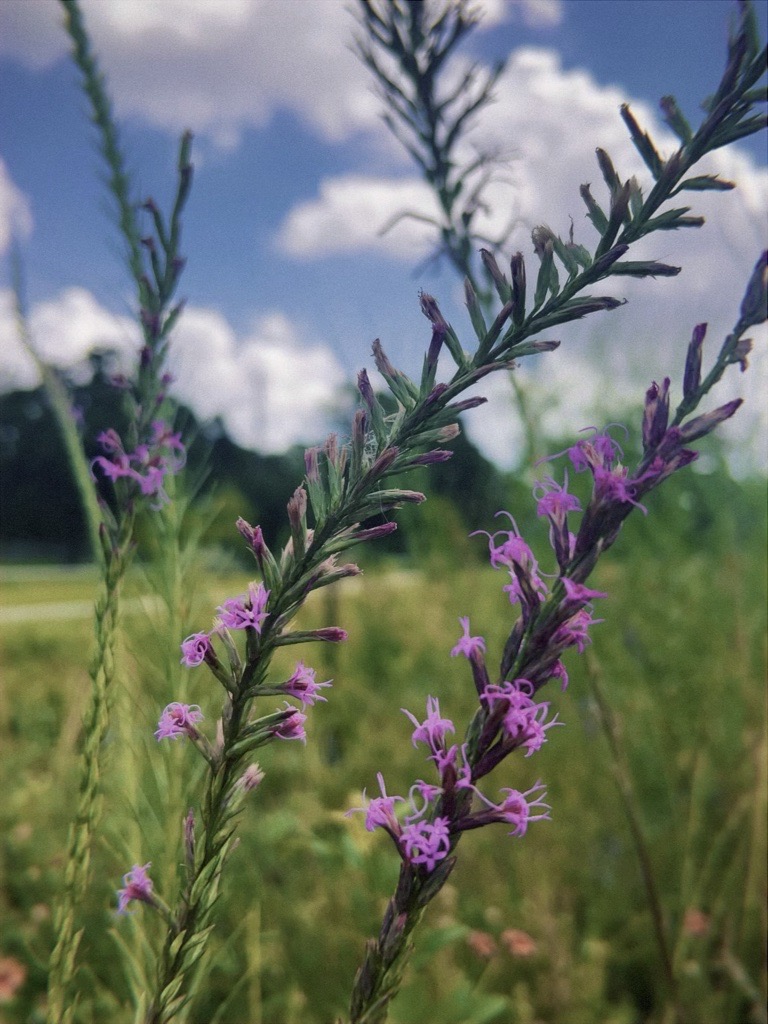
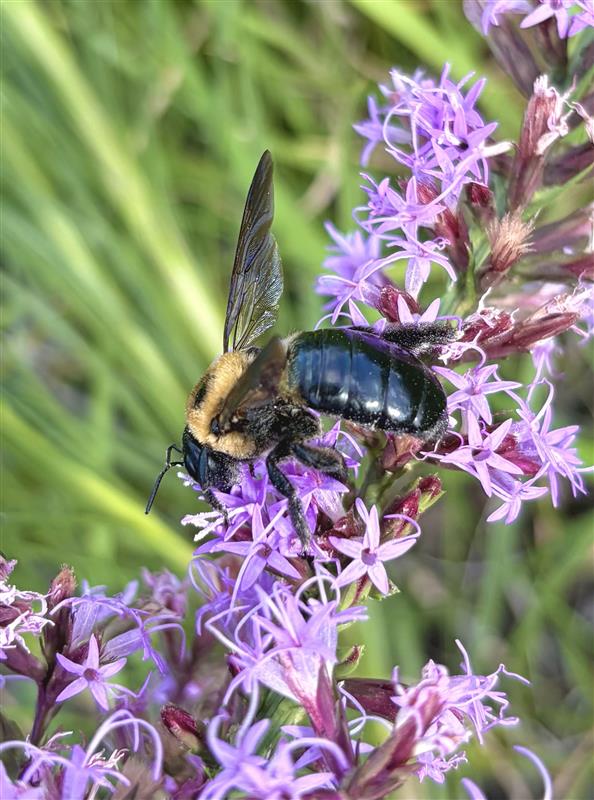
An Eastern Carpenter Bee (Xylocopa virginica) pollinating the tiny flowers of Sharp Blazing Star (Liatris acidota)
Butterfly Milkweed
Last in our wildflower spotlight is a member of everyone’s favorite Family, the Asclepiadaceae (Milkweed Family). Butterfly Milkweed (Asclepias tuberosa) is a local milkweed that draws in more than just Monarch Butterflies (Danaus plexippus). This species supports a number of pollinators, including Bumble bees (Bombus spp.), Grey Hairstreak (Strymon melinus), and Queen Butterflies (Danaus gilippus). Not to be confused with Tropical Milkweed (Asclepias curassavica), which is harmful and disruptive to Monarch Butterflies in this region, Butterfly Milkweed sports Astros orange, whereas Tropical Milkweed blooms in a red and orange combo (think Kansas City Chiefs). Butterfly Milkweed is also great for incorporating into home gardens, as it’s highly deer-resistant.
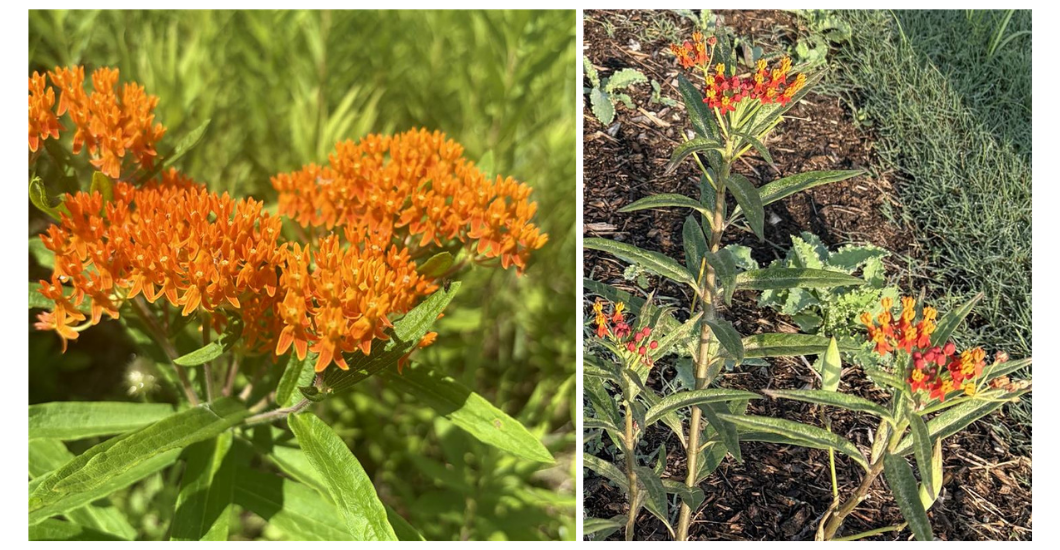
Supportive Butterfly Milkweed’s (A. tuberosa) orange flowers vs. disruptive Tropical Milkweed’s (A. curassavica) orange and red.
