PUBLISHED: April 2026
Spring has sprung at the Houston Parks Board nursery. The team has been hard at work, starting from seed sowing native plants to dividing native grasses and forbs. As we prepare for the upcoming 2026 growing season, the plants that we propagate (or grow) will be used in all of our projects and events throughout the year and for years to come. The short, cold winter season has led us into a warm, early spring, and with the recent rains, it has prompted plenty of nursery plants to wake up.
During this time, our nursery staff took cuttings of black willow (Salix nigra), American beautyberry (Callicarpa americana), and elderberry (Sambucus canadensis).
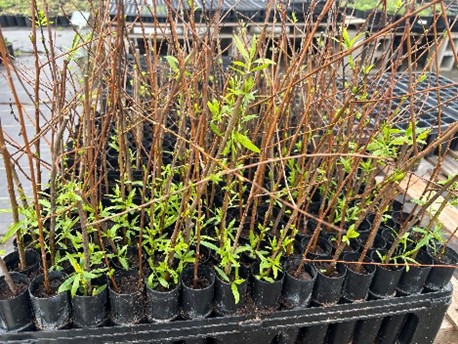
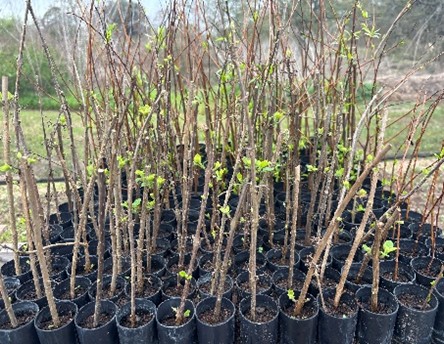
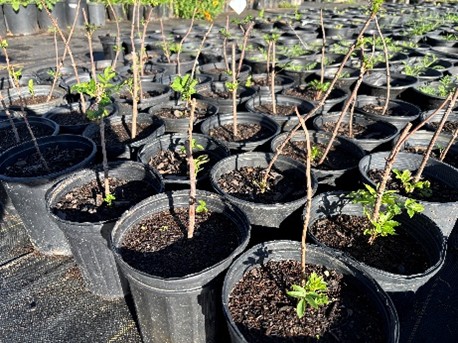
Cuttings from understory shrubs and trees, like the ones above, are best taken when they are in a dormant phase or budding. The best time for this type of propagation is January through early March, depending on the species. Performing cuttings during that time allows the cutting to put more energy into rooting, and then eventually leaves.
Meanwhile, grasses like sideoats grama (Bouteloua curtipendula), Virginia wild rye (Elymus virginica), and forbs like eastern false aloe (Manfreda virginica) were sown by seed on January 6, 2026, after undergoing cold stratification treatment for 30 days prior.
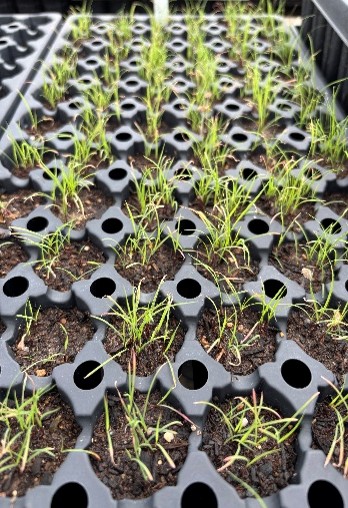
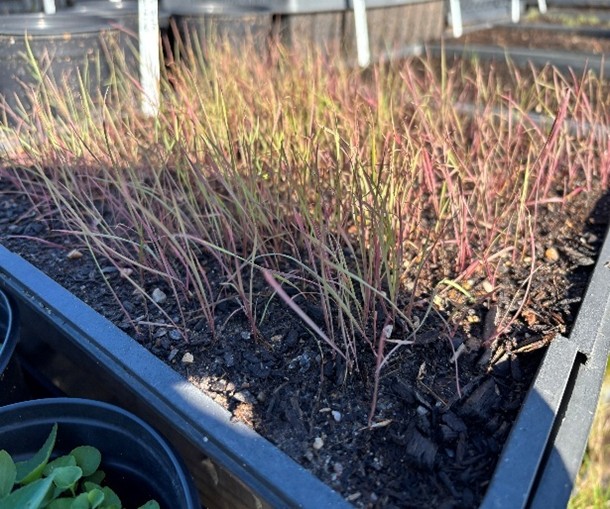
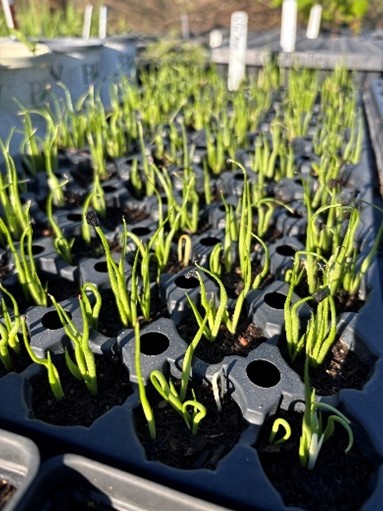
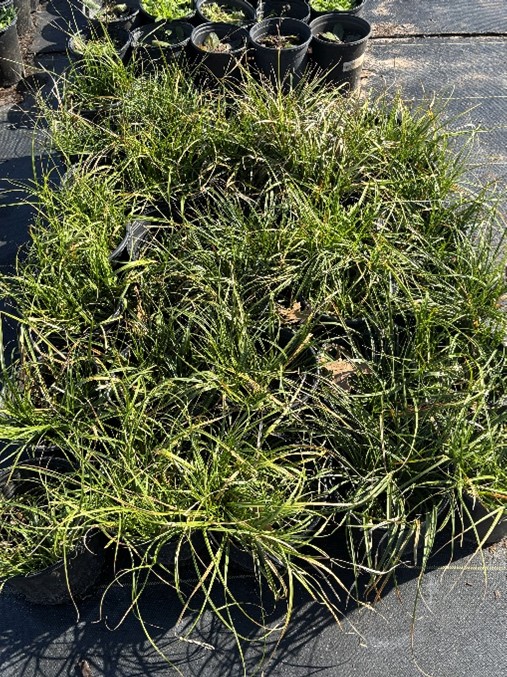
As part of our focus on producing native plant material, we have also started dividing many of our native plants by root. We only do this to plants that are left over from previous years or when they outgrow their pots. When you divide plants, it also helps with their overall health.A great example of this is the cherokee sedges (Carex cherokeensis).
The two pictures below show this method. The picture on the left shows the plants before they were divided, and the picture on the right shows an approximate number of new plants after the division was done. (There are far more plants divided than what’s shown in the pictures!)
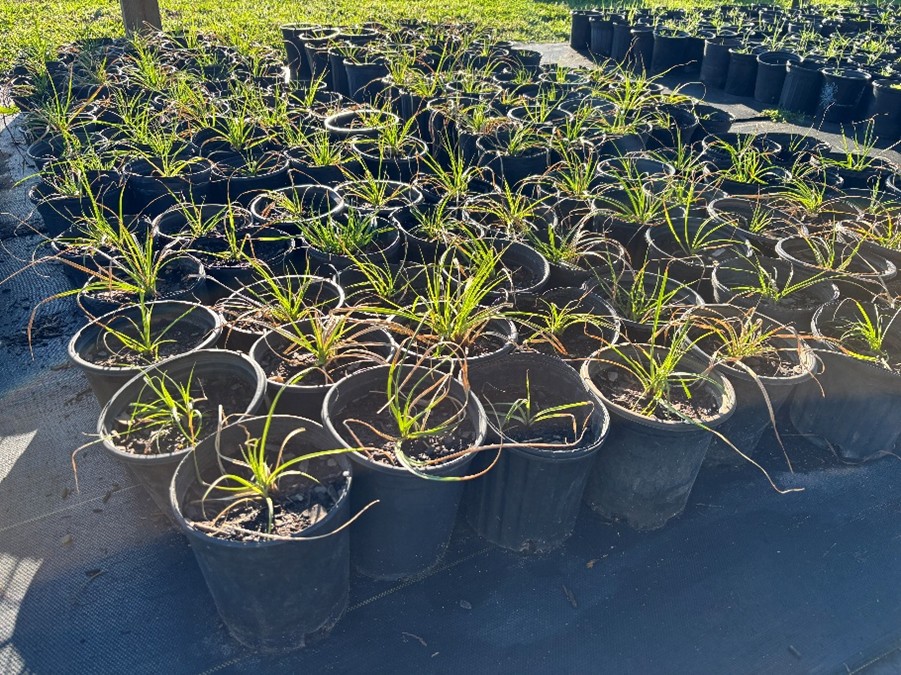
While we are working hard to make magic in the nursery, we also get the chance to relish the beauty that native plants have to offer. Take a look at what is currently blooming below.
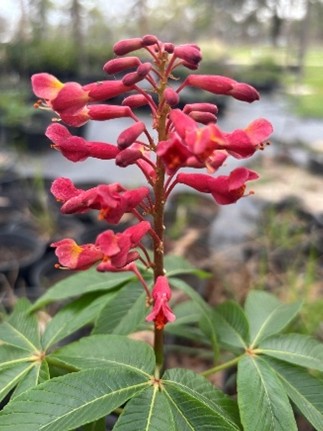
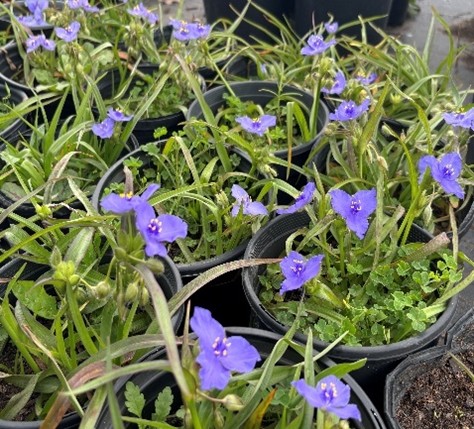
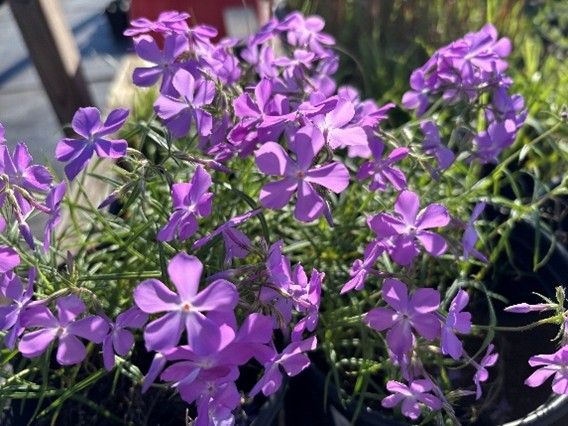
Many native plants require some level of cool weather and short days to produce flowers, like the Carolina jessamine (Gelsemium sempervirens). This vine is one of the first flowers to bloom at the end of our winter season.
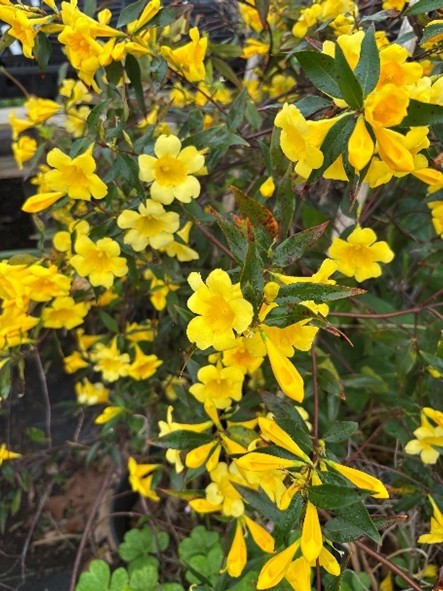
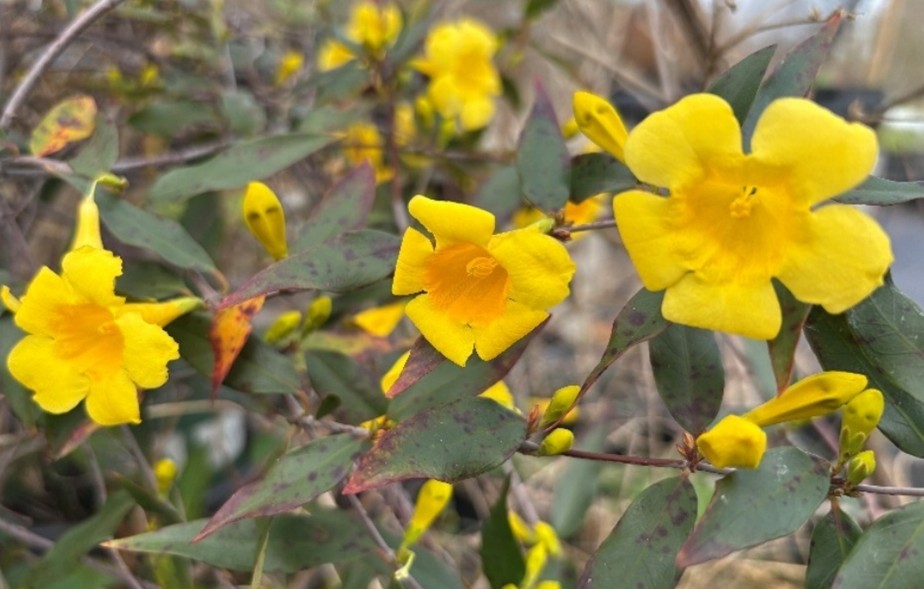
Carolina Jessamine
HPB will continue to share updates on our growing nursery as more plants bloom this spring!