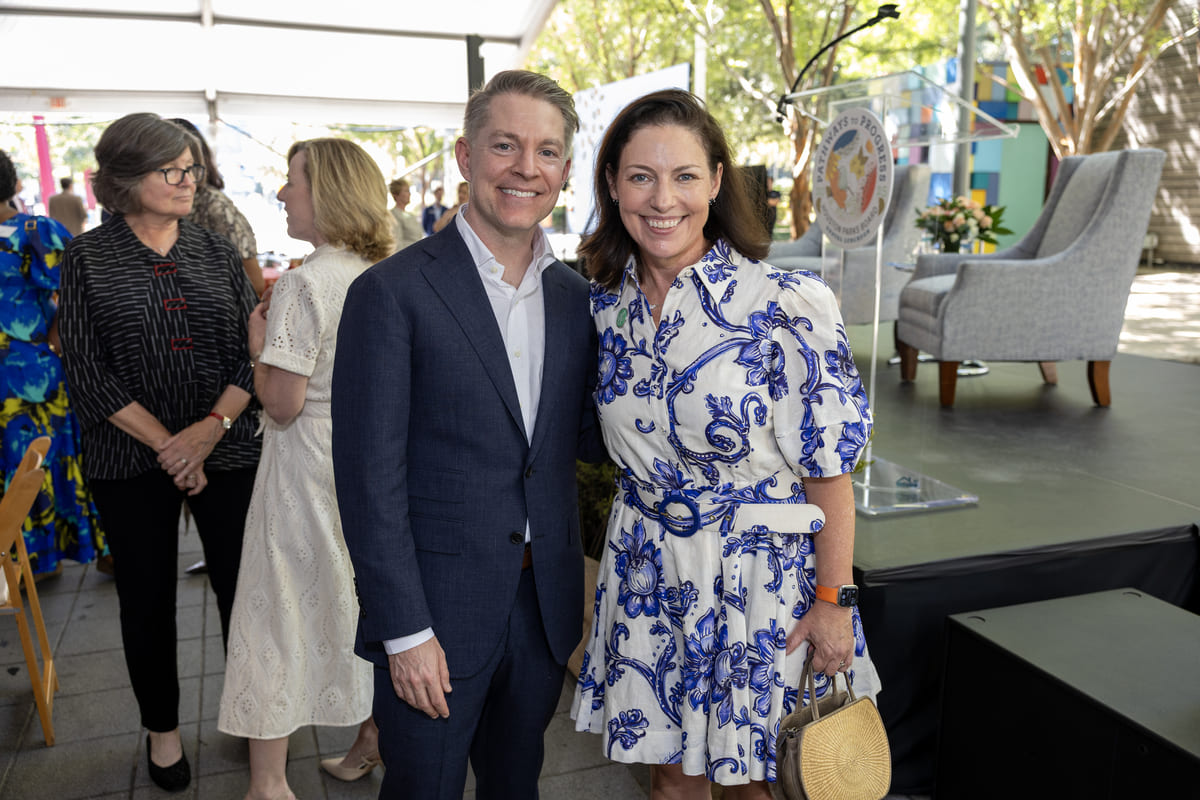
Houston Parks Board (HPB) has spent the last 50 years transforming how Houstonians experience parks and greenspace. As President and CEO Justin Schultz steps into his new role, he shares what excites him most about this moment, where he sees opportunities to build on HPB’s legacy, and why parks and trails are critical to Houston’s future.
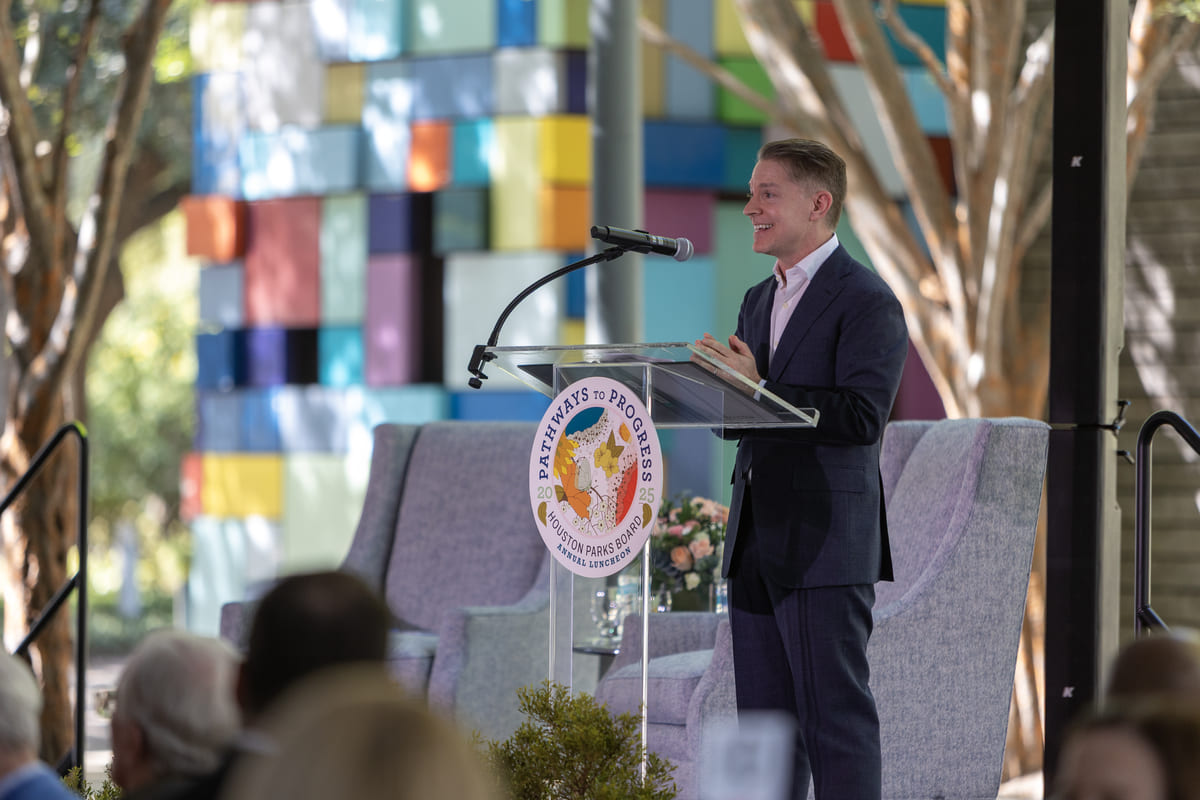
What excites you most about leading HPB at this moment?
HPB is in a terrific position to expand our impact. The organization has built a strong reputation, both locally and nationally, as a leader in parks and trails, and I’m excited to leverage that foundation. I get to step into this new role in an organization that has momentum, credibility, and a proven track record. We have an incredible opportunity to continue growing and make Houston greener and more connected.
We’re also at an important inflection point in how Houston thinks about parks and greenspace. Public funding for parks is under tremendous pressure at the local and national levels, and it is important to communicate why parks matter. Parks aren’t just nice places to walk your dog or go for a stroll — they’re an essential public good. They’re critical to our region’s economic vitality, our climate resilience, and our public health. In many ways, our greenspace system is just as important to Houston’s long-term success as institutions like the Texas Medical Center and our Theater District. One of HPB’s key roles is to convene partners and help lead that conversation.
HPB has a long history of transformational projects. Where are you eager to build on that legacy?
I’m especially excited about continuing to grow the Bayou Greenways network by expanding it beyond city limits and by enhancing the experience along existing trails. Our bayous don’t stop at Houston’s city limits, and our trail network shouldn’t either. I see real opportunity to partner with additional municipalities and other government entities to continue to build our large-scale regional trail system.
At the same time, we’re always looking for ways to improve how people experience the Bayou Greenways — from adding shade and water access to public art — so they remain welcoming, inclusive spaces for all. A projected 3.8 million trail users visited the Bayou Greenway system in 2025, and we want to ensure that system continues to be best-in-class through expansion and improvements.
I’m also deeply proud of our neighborhood park work, particularly through the Let’s Play Houston program. Neighborhood parks are where daily life happens, yet they’re often overlooked for investment. Through this initiative, we’re making meaningful improvements in 25 of Houston’s most socially vulnerable communities. These projects that may be smaller in scale compared to some of our other work but are transformational for the people who use them every day.
Parks and trails play many roles — connection, resilience, health, and happiness. What feels most important to you?
Connectivity stands out to me. Our parks and trails bring together people from all walks of life. In a time when many of us live very siloed, and at times isolated lives, parks remain one of the last truly shared public spaces where people of different backgrounds, incomes, and perspectives come together. That’s incredibly powerful.
Climate resilience is also central to our work. Houston sits in a region with real climate challenges from heat, flooding, and increasingly unpredictable weather. Our parks are part of the solution. By transforming bayous into greenways, flood detention basins into parks, and investing in native landscapes like prairies and wetlands, we’re helping our region absorb floodwaters, reduce heat island impacts, and build resilience.
I believe Houston’s greenspaces can serve as a living laboratory — not just for our city, but for other regions across the country and even the world — showing how parks can play a critical role in adapting to climate change.
Houston is known for collaboration between the public and private sectors. How do parks and trails contribute to that story?
Houston has always thrived through collaboration between the public sector, philanthropy, and nonprofit partners. Our parks and trails are a direct result of that collaboration, and they’re proof that long-term, intentional investment pays off.
Just as the Texas Medical Center represents global leadership in health care, Houston’s parks and greenspaces can represent leadership in resilience, quality of life, and environmental innovation. The Bayou Greenways network, neighborhood park investments, and nature-based solutions like Hill at Sims all demonstrate what’s possible when we work together with a shared vision.
When you need a reset, how do you enjoy time outside in Houston?
I’m a runner and that’s how I get to reset, especially on the Bayou Greenways. Being on the trails creates both physical and mental distance from the day-to-day noise. It’s time to think, reset, and reconnect.
Having grown up in Houston, I’ve seen how dramatically our parks system has evolved. Bayou Greenways didn’t exist when I was younger. Being able to personally enjoy this system is incredibly meaningful. It reinforces why our work matters and why continued investment in parks benefits everyone. I am excited to help lead our region’s parks and greenspace into the future — a greener, more resilient, and certainly more connected Houston.