
PUBLISHED: May 2026
In the Houston area, spring is often defined by bluebonnets, paintbrushes, evening primrose, and other showy wildflowers lining roadsides and Bayou Greenways. While these cool-season blooms get most of the attention, they’re only part of the story. There are plenty of other species out there quietly doing important work alongside crowd favorites.
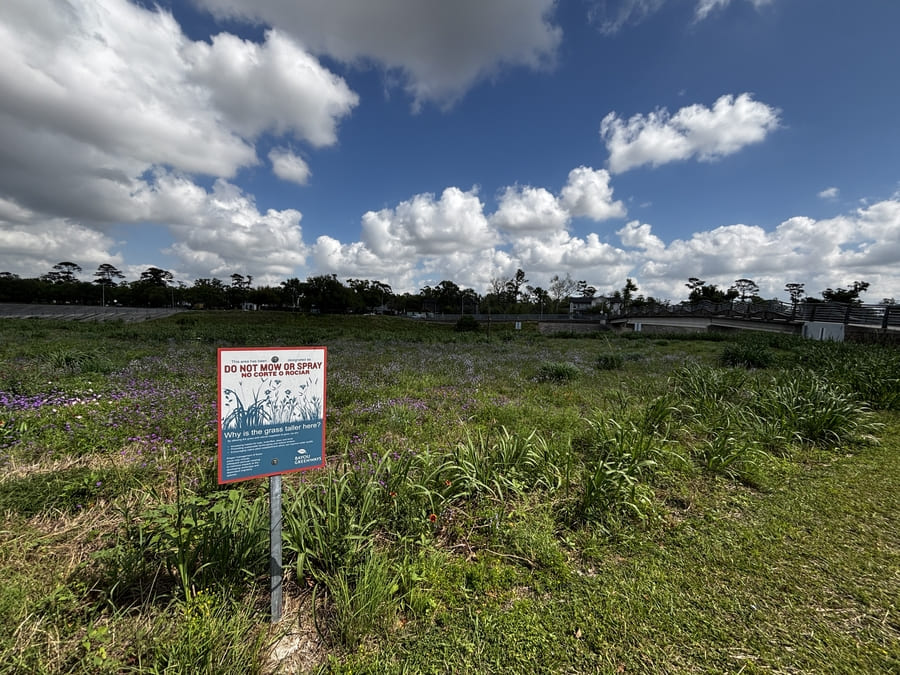
Cool-season plants take advantage of Houston’s mild winters and reliable spring moisture. They germinate early, establish quickly, and grow before the intense heat and drought of summer set in. While they may not always be flashy, these species play a critical role in supporting prairie ecosystems right when they need it most. Let’s explore some of the cool-season species Houston has to offer.
Prairie Wedgescale (Sphenopholis obtusata)
Prairie wedgescale is a native, cool-season bunchgrass commonly found in prairies, though it is often overlooked due to its short stature and lack of showy flowers compared to warm-season grasses such as Yellow Indiangrass (Sorghastrum nutans).
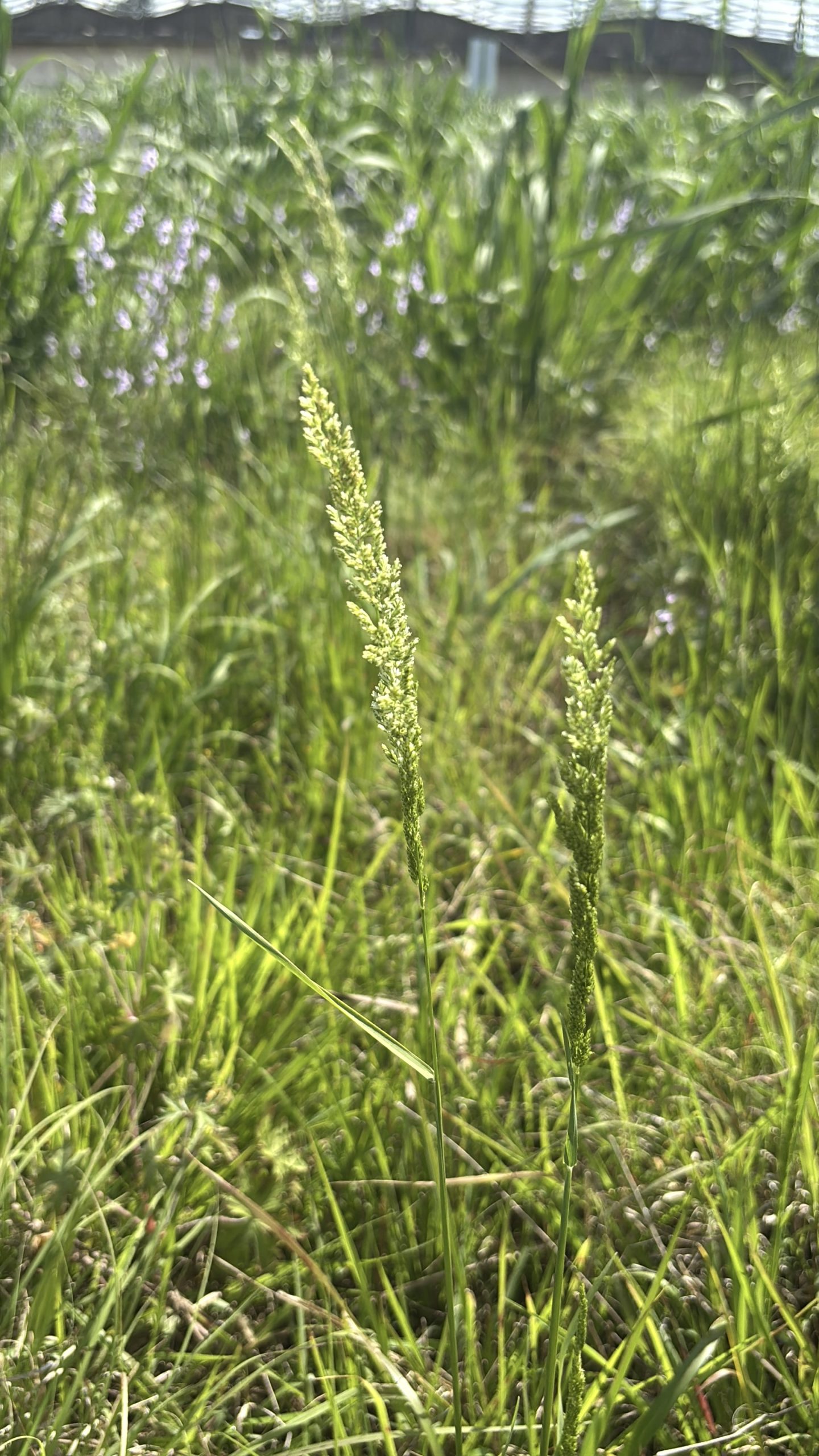
Prairie wedgescale germinates quickly under cooler temperatures and contributes early vegetative cover within the prairie communities. This early growth helps stabilize soil during spring precipitation events and reduces erosion in exposed areas.
Prairie wedgescale also plays an important role in supporting early-season invertebrate activity. Increased invertebrate presence during this period provides a critical food resource for migratory bird species. Despite its relatively inconspicuous appearance, prairie wedgescale contributes to key ecological functions during the early growing season.
Texas Wintergrass (Nassella leucotricha)
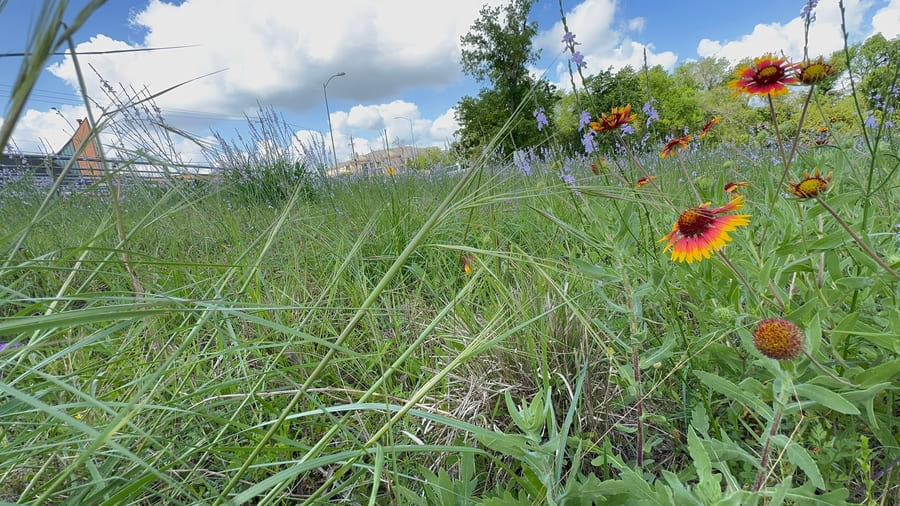
Growth typically begins in late fall or early winter and continues through spring, providing consistent green cover during a period when most warm-season grasses are dormant. This early growth helps maintain ground cover, reduce bare soil exposure, and contribute to overall ecosystem stability during the cooler months.
Texas wintergrass also provides ecological value through forage and seed production. Its foliage can serve as an important food source for wildlife, and its seed heads provide food for birds. In prairie systems, it functions as a transitional species, helping carry plant communities from winter dormancy into the active warm-season growing period
Lanceleaf Coreopsis (Coreopsis lanceolata)
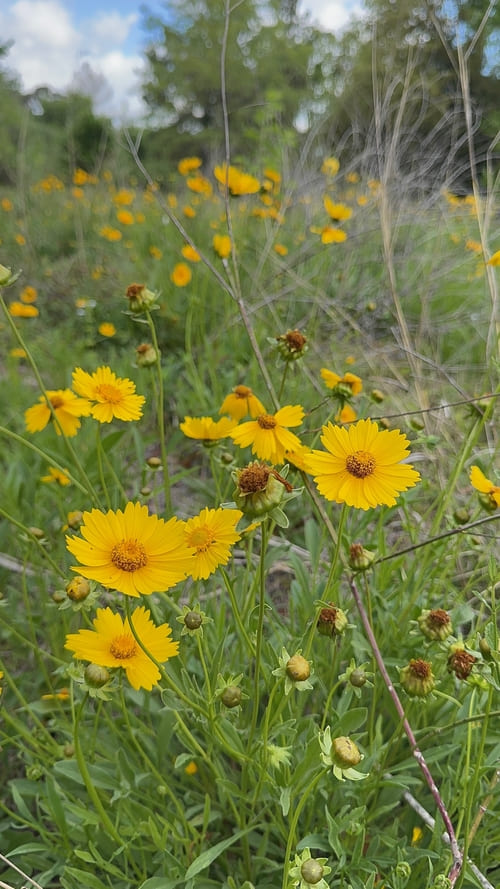
Lanceleaf coreopsis is a native perennial forb that is both easy to recognize and ecologically important in prairie systems. It produces bright yellow, daisy-like flowers from early to mid-spring, often standing out as one of the first strong color displays in open grasslands.
While it can be found in native plantings, Lanceleaf coreopsis is especially notable when it appears naturally in prairies, often in areas with open or disturbed soils. Its blooms provide nectar and pollen for native bees and butterflies during a time when few other plants are flowering, making it an important resource for early pollinator activity.
Lanceleaf coreopsis is adaptable to a range of site conditions and establishes readily, making it a reliable component of both remnant and restored prairie communities. Its presence contributes to overall plant diversity and supports pollinator populations during the early growing season.
White Wild Indigo (Baptisia alba)
When people think of springtime legumes in Texas, bluebonnets usually come to mind, but they’re just one of many native legumes that show up at this time of year.
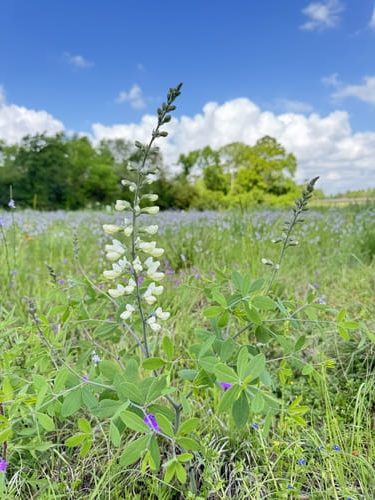
White wild indigo is another standout. It’s a perennial native plant that plays an important role in prairie ecosystems. Like other legumes, it helps improve soil health through a process called nitrogen fixation, which basically means it takes nitrogen from the air and converts it into a form that plants can use. This benefits not only white wild indigo, but also the plants growing around it.
It also develops a deep root system, which helps it survive drought and improves soil structure over time. In the spring, its white flower spikes attract a variety of pollinators, and its leaves provide food for certain specialized insects.
It also develops a deep root system, which helps it survive drought and improves soil structure over time. In the spring, its white flower spikes attract a variety of pollinators, and its leaves provide food for certain specialized insects.